Team and collaboration – why is it sometimes so hard to get it work…
Teamwork and collaboration are often described as the backbone of successful organizations – yet in practice, they can be surprisingly difficult to achieve.
As humans, we all bring different personalities, backgrounds, qualifications, motivations and at times, even competing objectives or personal agendas. Given this diversity, it is not surprising that teams and organizations occasionally fail to function or perform as expected – even when great care has been taken to recruit people with the right values, skills and cultural alignment. The question, then, is not if this happens, but why.
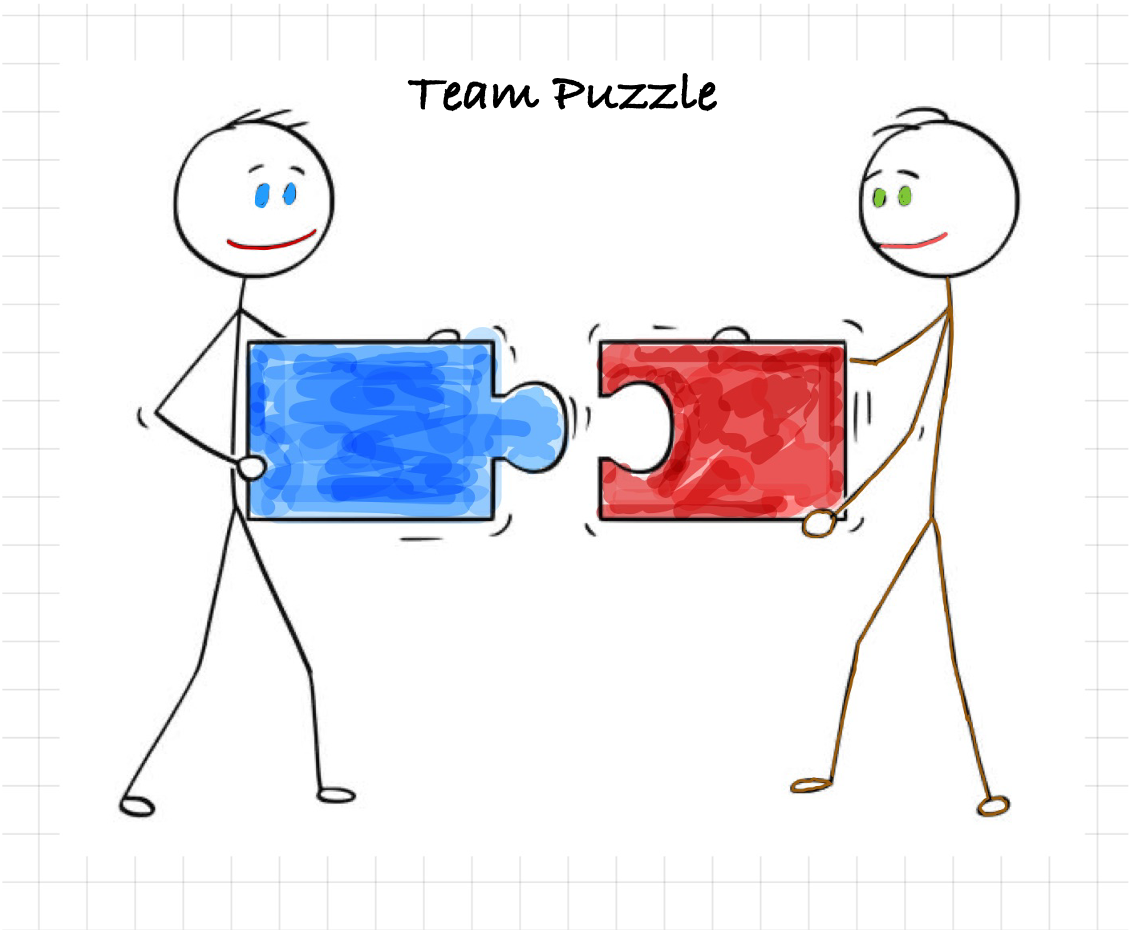
Because organizations are built on people, everything begins with how those people are treated. Most individuals want to be seen, valued for their contributions and acknowledged for the effort they put into their work. Yet, in some organizations, people are managed with a sense of anonymity –”a cog in the machine”. When leaders fail to recognize individual contributions, or do not recognize the team puzzle employees gradually begin to feel invisible and irrelevant.
Teams operating under these conditions often find themselves merely trying to stay afloat rather than striving to excel. Over time, a lack of recognition and meaningful engagement erodes trust, motivation and performance. Left unaddressed, this erosion can turn once-capable teams into dysfunctional ones—and ultimately, undermine the effectiveness of the organization as a whole.
The role of the leader
Leadership is about understanding people and creating a stimulating work environment that enables the achievement of shared objectives. Leaders must therefore ask why some teams fail to collaborate and perform effectively over time, while others thrive. What makes certain teams dysfunctional and others successful? Are there patterns in team members’ behaviors that shape positive or negative dynamics?
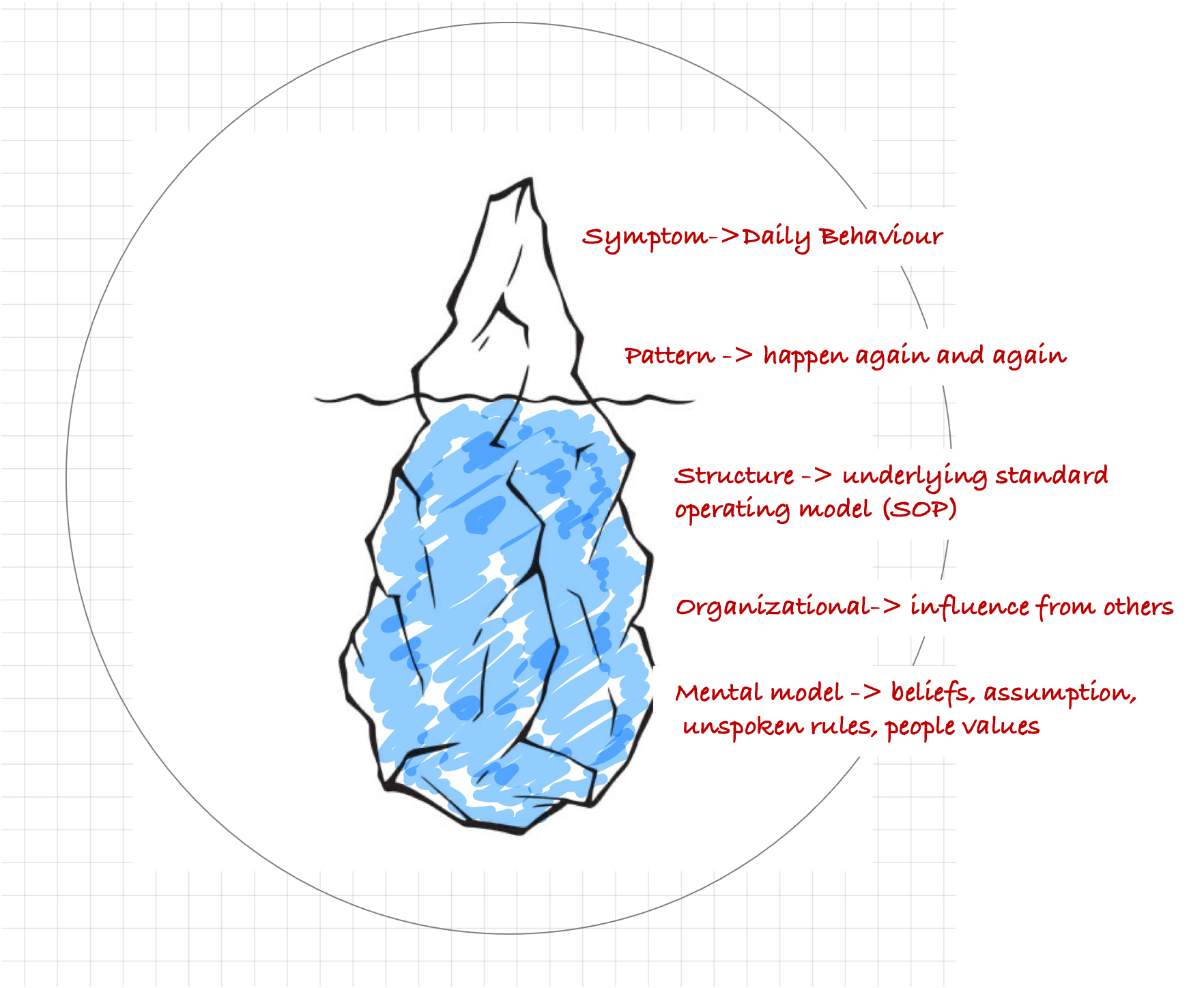 Or are there deeper underlying structures—such lack of shared beliefs, different assumptions, personal agendas and resistance for any reasons or / and in combination with organizational behavior and processes that hinder collaboration?
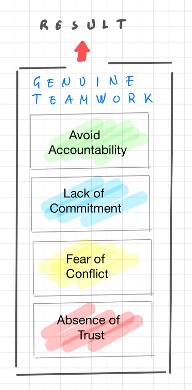
In most cases, there are five distinctive human factors that explain why teams struggle to work effectively together. And, leaders need to have insight in them and tools to adress them.
Absence of Trust
A lack of trust among team members often leads individuals to carry emotional shields, avoiding openness, asking for help or perceived as being vulnerable. Mistakes, in particular are frequently perceived as signs of weakness rather than opportunities for learning. As a result, psychological safety becomes low, undermining team ability to collaborate – and in such environment people tend to have a limited approach to open and honest communication as a form of self-protection.
This dynamic, however, can be changed. When leaders consistently demonstrate that mistakes are acceptable, actively promote a learning mindset and show genuine interest in the people they lead, trust begins to grow. Over time, this creates a safer environment where individuals feel comfortable speaking up, communication improves and teams are able to perform at a higher level. Trust is therefore the foundation for creating an environment in which people can thrive and express themselves without fear of personal or professional negative consequences. However, other elements are also vital for team development, but Trust is the most essential building block.
Fear of Conflict
When trust is missing, teams tend to avoid open Conflict or disagreement. As differing opinions are often interpreted as negative or disruptive, rather than as valuable perspectives to team development as well as improving decision making. Hesitation to solve conflicts often lead to tension and instead of engaging in healthy debate and sharing of thoughts to resolve issues, information is shared selectively and privately, creating one-to-one conversations rather than open team discussions. This dynamic results in some individuals feeling included while others are left out, weakening collaboration and reinforcing division.
To counter this, leaders must model transparency and encourage open dialogue by focusing discussions on facts and issues rather than on personalities. Normalizing constructive disagreement helps teams make better decisions and strengthens trust across the team.
Lack of Commitment
When trust is low and conflict is avoided, it becomes difficult to build genuine engagement and Commitment. Teams may appear to agree with decisions, but the alignment is often superficial. People comply rather than commit, leading to hesitation, unclear ownership and a tendency to avoid responsibility. As a result, processes slow down, energy drops, and momentum is lost- ultimately impacting performance.
This pattern can often be reversed by creating clarity around decisions and next steps. Explicitly stating, “This is what we have agreed,” helps align the team and reinforces accountability. Equally important is giving everyone the opportunity to share their perspectives. When people feel heard, their commitment to decisions strengthens, even if their original viewpoint did not prevail. A simple question such as ‘What do you think?’ can help foster engagement and commitment—even when someone does not necessarily agree. By being invited into the conversation, people are more likely to accept decisions and accountability made for the greater good.
Avoidance of Accountability
When teams avoid collective Accountability, performance and standards begin to erode and underperformance becomes tolerated. Issues are left unaddressed, leading to frustration and disengagement among those who are carrying their weight. Moreover, Accountability should not rest solely with the manager; it must be reinforced through peer-to-peer conversations in order to build shared consciousness and be facilitated by leadership.
To sustain high standards, teams need a shared understanding that accountability is a collective responsibility. Each team member must contribute, recognize their impact, and take ownership – not simply because they were told to do so, but because they feel responsible for the team’s success.
Inattetion of Result
High-performing organizations focus on shared Results. While individual performance matters, organizations are not individual competitions. They are more like football teams, where players contribute in different roles toward a common goal. What ultimately matters is not individual statistics, but what the team achieves together.
For this reason, performance measurement and goal setting should prioritize team outcomes. When goals are aligned at the collective level, individual efforts naturally support the broader objectives. Regular discussion and calibration around results help maintain focus and prevent individual egos from overshadowing the team’s purpose – ensuring that everyone remains aligned with the outcomes the organization is meant to deliver.
In 2006, The Five Dysfunctions of a Team was published, introducing a set of universal human principles that explain why teams so often fail to perform at their best. While the framework offers clear insight into the root causes of dysfunction, translating that understanding into meaningful change is far more challenging in practice.
After all, teams are made up of human beings – each with distinct personalities, experiences and motivations. This is where leadership becomes critical. Experienced leaders understand these human dynamics, adopt and apply insight to motivate, guide and support others – bringing individuals together around a shared purpose.
At the OMT Global Leadership Development you will find more information about Teams that don’t work and some tools that can help you in a change management journey’s.